Written and Researched by Matthew Scarlino. Toronto, 2021. Revised 2022.
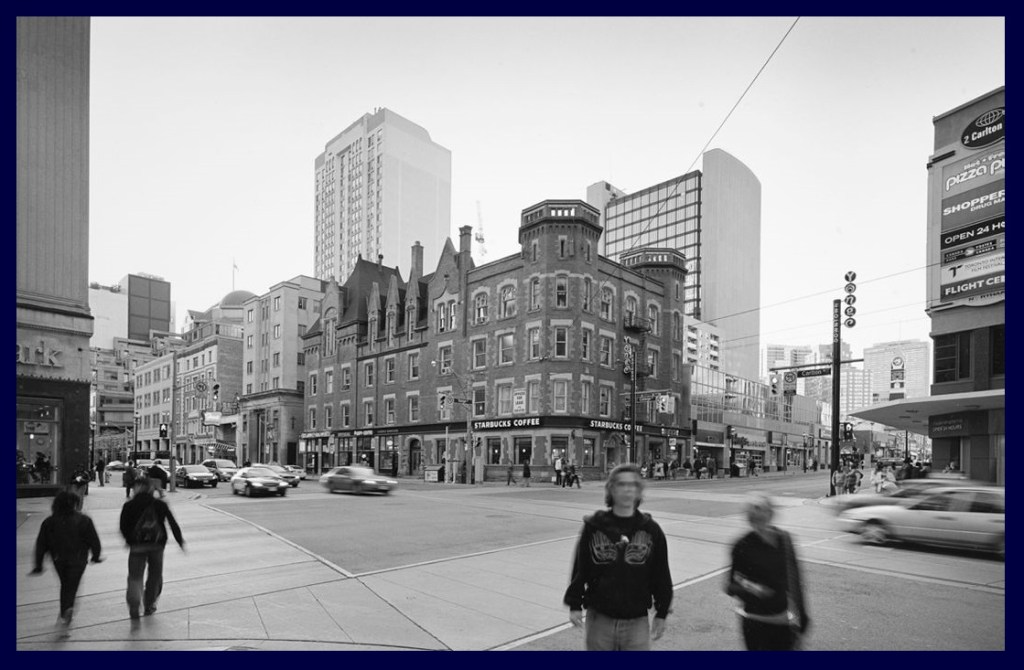
It was on the evening of a mild September 14th, many years ago, that a group of Toronto police officers who had returned from the Great War met downtown at the County Orange Building. That social club, better known as Orange Hall or the Victoria Hall, was already the meeting place of the newly formed Toronto Police Association. Now the site of a drab grey office tower, the red-bricked hall was situated on the southwest corner of Queen Street East at Berti Street, opposite the Metropolitan Church, and just down the street from the old No. 1 (Court St) Police Station.
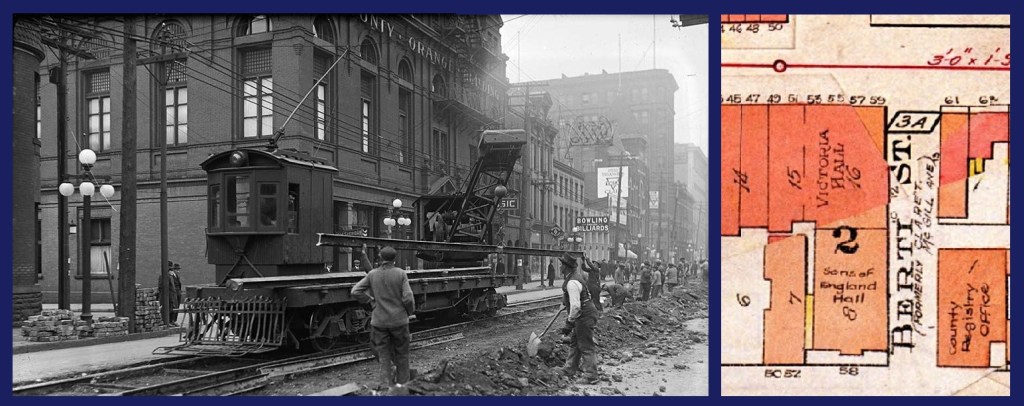
[City of Toronto Archives Fonds 1231, Item 426; Goad’s Fire Insurance Plan 1924].
These police war veterans met to form an association similar to that of the pre-eminent Great War Veterans Association, the largest such veterans association at the time. Formed in 1917 while the war was still ongoing, the influential “GWVA” was held in high esteem by returned men. Therefore, during the policemen’s meeting one imagines these men adapted their aims similar to those of the GWVA.
- To preserve the memory of those policemen who suffered and died in war for the nation and the empire; to erect and preserve monuments to their valour and sacrifice; and to establish annual memorial services.
- To ensure proper care for their fellow police war veterans, their widows and families, and other returned soldiers, facing ill-heath, financial difficulties, or other hardships.
- To promote pride and loyalty to Canada and the Empire and service in their interests.
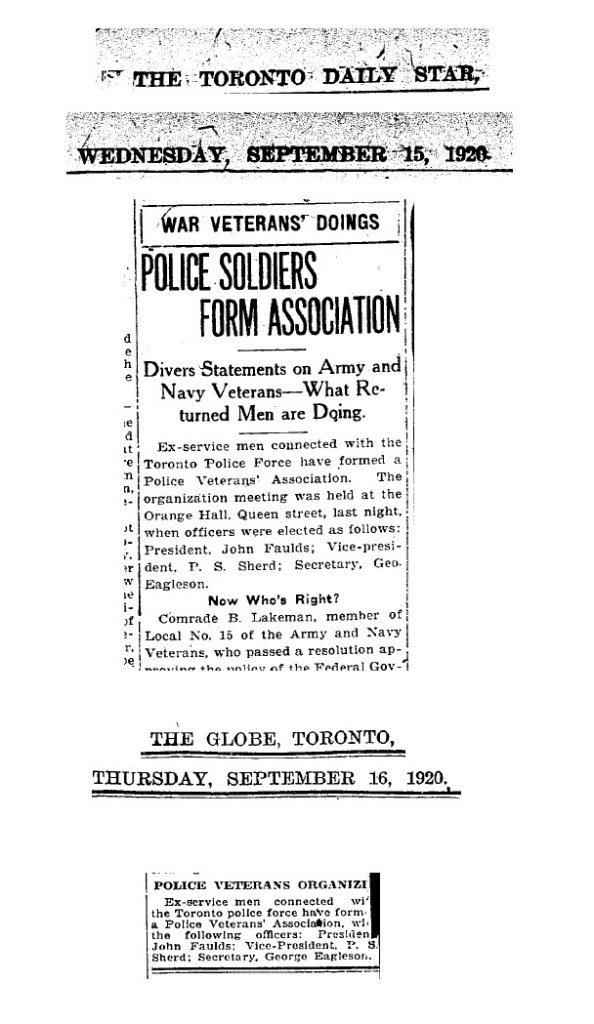
With the objectives settled, the men voted to elect its first officers. The Toronto Daily Star reported the following day:
Police Soldiers Form Association
Toronto Daily Star
Ex-service men connected with the Toronto Police Force have formed a Police Veterans’ Association. The organization meeting was held at the Orange Hall, Queen street, last night, when officers were elected as follows: President, John Faulds; Vice-President. P. S. Sherd [sic]; Secretary. Geo. Eagleson.
Elected President was Constable John Faulds, a Scot, 6’2, fair skinned with brown hair, blue eyes, and with a tattoo of a woman’s bust on his wrist. He had previously been a police officer in the United Kingdom, and a soldier in the British Army’s 3rd Battalion, Argyll & Sutherland Highlanders. Faulds emigrated to Canada and joined the Toronto Police Force in 1913, assigned to the rough and tumble old No. 4 (Wilton St) Station in Cabbagetown. Later, at 28 years old and married with a 9 month old son, he answered the call to arms and enlisted in Toronto’s 34th Battery, Canadian Field Artillery. Known as the “Aquatic Battery”, it was primarily comprised of men who were also members of the Toronto Canoe Club, the Toronto Rowing Club or the Balmy Beach Canoe Club. Training on 18-pounder guns, the natural leader quickly rose to the rank of Sergeant. He arrived in France in July 1916 as part of the 9th Brigade Canadian Field Artillery, before participating in the Somme offensive. Shortly after arriving at the front, was promoted to Warrant Officer I and appointed Regimental Sergeant-Major. He would lead his men in Canada’s major battles until December 1917 when he was awarded a temporary commission and sent to Witley Camp in England to train recruits. His friend Constable Pover wrote in a
letter to the Star that his commission was due to his bravery in the field. He returned to France in September 1918 as RSM of the 9th Brigade Artillery to fight in the final offensives of the war.
Patrol Sergeant Samuel “Tommy” Third was elected Vice President. Another tall Scotsman standing 6’2, with black hair and blue eyes. Third had been a Toronto Police constable since 1907, and was 33 years old, married and with a 10 year old son when he enlisted in the 180th (Sportsmen) Battalion, Canadian Expeditionary Force in January 1916. The unit was made up of local amateur athletes and was the choice of many TPF officers who joined the army. Third was admitted into the unit despite the medical officer’s note about a previous hernia operation and hammer toes – both ailments related to his police service. In October 1916, during “PT” (physical training) Third seriously re-aggravated his hernia, and had to be fitted with a truss, while his foot problems also worsened. Despite this, Third sailed overseas to England with his unit in November 1916, and was promoted to Sergeant due to his leadership abilities. However, his medical status saw him removed from the drafts headed to France, and he was instead posted to the 3rd Reserve Battalion (Central Ontario) at West Sandling, England in January 1917. There and for the remainder of the war, he engaged in the rigorous training of infantry soldiers destined for the front, despite his painful ailments.
Constable George Eagleson was elected Secretary. Hailing from Belfast, Ireland, Eagleson was freshfaced, tall and slim with grey eyes and had light brown hair. Eagleson joined the Toronto Police barely 20 years old, in the fall of 1914. Prior to becoming a police officer, he served in the Saskatchewan Light Horse and the Mississauga Horse of the Canadian Militia. On 13 January 1916, Eagleson enlisted with the 169th Battalion (109th Regiment), Canadian Expeditionary Force. Eagleson was quickly made acting Sergeant for the duration of their training in Canada, and sailed to England in November 1916 for further preparation. Eagleson landed in France in August 1917 days before the Battle of Hill 70, as a replacement in the 116th Battalion (Ontario County), a unit with ten former Toronto constables under their colours. Just prior to the Battle of Passchendaele, Eagleson was promoted to Corporal and later, during the Hundred Days’ Offensive was promoted to Sergeant. In October 1918, Eagleson was appointed Company Sergeant-Major during the final push.
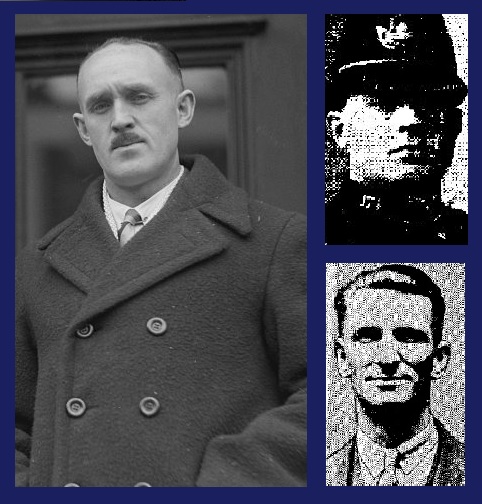
[City of Toronto Archives, Fonds 1266 Item 6818; Toronto Daily Star 2 Feb 1916; Toronto Daily Star 26 Mar 1927]
With its aims and objectives settled and its officers elected, the precursor to today’s Toronto Police Military Veterans Association was born. Forgotten over generations, the meeting in that bygone hall actually took place on September 14th, 1920 – two years earlier than it has long been believed to have occurred. The newly formed Toronto Police War Veterans Association (TPWVA) wasted no time in one of its first orders of business – the erection of a monument to the service and sacrifice of members of the Toronto Police Force in the Great War.
On October 23rd, 1920, five weeks after the Association’s creation, page 9 of The Globe newspaper announced that “members of the Toronto Police Veterans’ Association have purchased a brass tablet containing the names of members of the force who enlisted, and of those killed in action during the war. The tablet will be placed in the City Hall.” Permission for this was granted shortly after Armistice Day 1920, when on November 15th the Civic Property Commission authorized the monument in the portion of City Hall (now Old City Hall) which contained the police headquarters – which occupied the Ground Floor, facing north to Albert Street, from the midsection of the building over to James Street. The next step would be to unveil the monument under suitable and dignified circumstances.
On Friday, January 21st, 1921, the first Toronto Police war memorial service took place, another aim of the TPWVA quickly achieved. It was held under partnership with the Toronto Police Amateur Athletic Association, known as the “T – P – triple A”, the senior-most association in the force. The ceremony was held in the Council Chamber of the City Hall. The Council Chamber was “crowded with relatives and friends of the men whose names were on the tablet” and also had in its audience Toronto’s Mayor Tommy Church, the Reverend Canon Dixon, and several prominent judges. The focus was on the new memorial tablet, which was set up on the Mayor’s dais, surrounded by silken flags, potted ferns and plants. Deputy Chief L.R. Geddes, President of the TPAAA, began the proceedings with a speech acknowledging this “most solemn hour” in the history of the force. The tablet was then unveiled by none other than Col. George Taylor Denison III, the renowned Victorian Age cavalry officer, and one of the most important figures in Toronto’s military history. Denison was the Police Magistrate for the Police Court at City Hall and a member of the Board of Police Commissioners. He remarked his pleasure that a permanent memorial would record the names of the Toronto Police Force’s war dead for all time, and compared the importance of the occasion to the unveiling of Brock’s Monument at Queenston Heights. Of the TPWVA, he said they acquitted themselves heroically and noted many of them had received honours and decorations. More speeches, prayers and song followed. Police Chief Samuel Dickson then spoke describing the men named on the tablet as “splendid men, every one of them,” whom he all knew personally. Deputy Chief Geddes then read aloud the names on the tablet listed under the heading “Our Gallant Dead”, before Last Post was sounded – a tradition that still holds today.
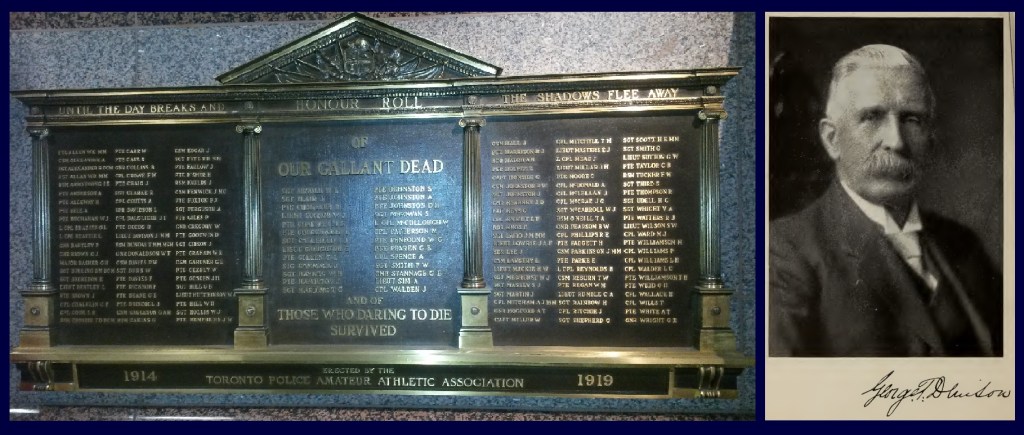
[Toronto Police First World War Memorial Tablet, Author’s Photograph; 1920 Portrait of G.T. Denison – Recollections of a Police Magistrate, The Musson Book Co. Ltd.]
With its aims of a monument and memorial services completed, the Association moved to cement its camaraderie. Two months after the first memorial service, at a meeting of the Board of Police Commissioners held on Wednesday, March 23rd, 1921, the TPWVA was granted permission to hold their first “at-home” (a 1920’s term for a party), to take place the following month. On the evening of Thursday, April 21st, the Association’s soirée took place at Oddfellow’s Hall. A “splendid crowd” enjoyed a night of dance, cocktails, and euchre, held in the adapted Gothic Revival style building, which still stands on the northwest corner of Yonge and College Streets. Perhaps the April timing of the social had some significance. In the coming decade, the TPWVA would host a yearly “Vimy Night” every April which drew large numbers and prominent guests at elaborate ballrooms in the city. These events became a major source of income for the Association’s charitable donations and even war-time fundraising. More recently, the Vimy anniversary has been the setting for mess dinners of the modern Toronto Police Military Veterans Association.
Toronto Police Headquarters.
[City of Toronto Archives, Fonds 1581, Series 2196, Item 26]
It is clear now that September 1920 to April 1921 saw the formation of the Toronto Police War Veterans Association and its traditions. Those events – the formation of the association, the election of an executive, the first memorial service, and the first social affair – forged an everlasting bond, to each other and to the fallen, which would last over a hundred years. The centenary is a significant achievement, and marks the Association as one of the oldest continuously serving veterans groups in all of Canada – senior even to the country’s most prominent veterans group, The Royal Canadian Legion (1925). It also marks the Toronto Police Military Veterans Association as the most resilient of City of Toronto’s municipal veterans associations in Toronto, many of which are now defunct – such as the Civic Employees War Veterans Association, the Toronto Board of Education War Veterans Association, the TTC Returned Men, and the Toronto Hydro-Electric System War Veterans Association.
Though the establishment date of the Association had long been obscured, and the actual centenary passed, the global COVID-19 pandemic would have made appropriate celebrations impossible. Therefore, official celebrations of the Centennial Anniversary of the Toronto Police Military Veterans Association continued to be scheduled for 2022.
Centennial Celebrations
In 2022, several letters of congratulation were received by the Toronto Police Military Veterans Association, including those from Chief of Police James Ramer, Mayor of Toronto John Tory, Lieutenant Governor of Ontario Elizabeth Dowdeswell and Governor General of Canada Mary Simon.
On August 20th 2022, the Association marched in its first parade since its centennial, fittingly at the centennial Warrior’s Day Parade. The TPMVA won the Goodyear Remembrance Trophy for best marching formation (with 16 or more members).
On September 14th 2022, an Anniversary Barbecue took place marking the birthday of the Association.
The biggest undertaking was the “MVA22” pilgrimage to the battlefields and war cemeteries of Europe. A delegation of the Toronto Police Military Veterans Association visited thirty-six gravesites spread over six countries and thousands of kilometres. A small Act of Remembrance service was performed at each site and embodied the Toronto Police Military Veterans Associations core values of Service and Remembrance.

Sources and Further Reading:
- Toronto Daily Star. 1920, Sept. 15th, Page 5: “War Veterans Doings – Police Soldiers Form Association”
- The Globe. 1920, Sept. 16th, Page 9: “Police Veterans Organize”
- City of Toronto Archives. James Salmon Collection – Fonds 1231 Item 0426: “April 29 1917 Car Track Reconstruction at Bond Street”
- City of Toronto Archives – Fire Insurance Plans. “Goad’s Fire Insurance Map – Toronto 1924”.
- The Great War Veterans’ Association of Canada. Constitutions and By-Laws. Ottawa, 1917.
- Library and Archives Canada – Personnel Records of the First World War. Service Files of No. 300742 John Faulds; No. 862015 Samuel Third; No. 679253 George Alexander Rennicks Eagleson.
- The Globe. 1920, Oct. 23rd, Page 9: “Police to Remember Those Fallen in War”
- Toronto Daily Star. 1920, Nov. 15th, Page 2. “Honor Police Who Fell”
- The Globe. 1921, Jan. 22nd, Page 21. “Inscribe Names on Honor Roll”
- Toronto Daily Star. 1921, Jan. 22nd, Page 3. “Police Honor Dead Comrades in Arms”
- Denison, George T. Recollections of a Police Magistrate. The Musson Book Co. Ltd. Toronto, 1920.
- The Globe. 1921, Mar. 24th, Page 6. “Board Suspends Four Interpreters”
- Toronto Daily Star. 1921, Apr. 22nd, Page 30. “Local Briefs – Police Hold Dance”
- City of Toronto Archives. Peter MacCallum Collection. Fonds 1581, Series 2196, Item 26: “Looking north-west at College Street” 2008.
- The Globe. 1935, Apr. 10, Page 11. “Celebrate Quarter Century on Police force on ‘Vimy Night’”
 The Khaki and Blue Project