Researched and Written by Matthew Scarlino.
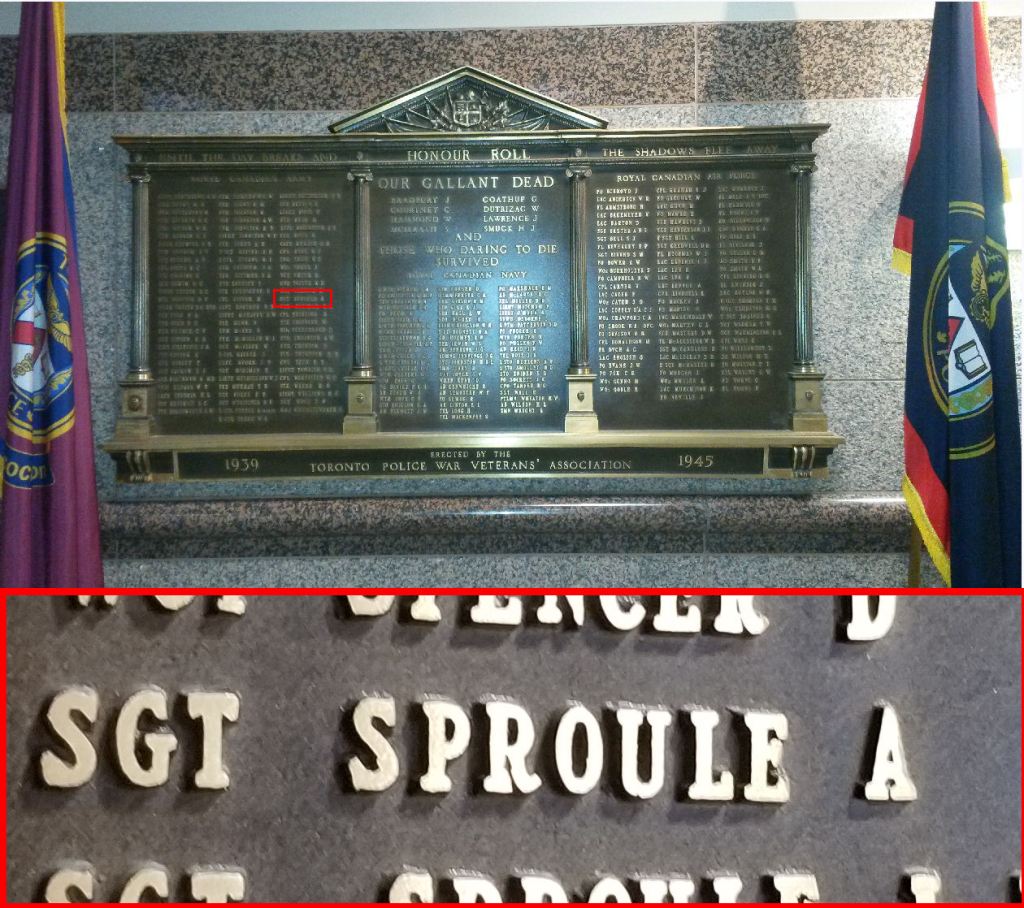
The Black Devils, officially the First Special Service Force, was a unit that struck fear into the hearts of the enemy during the Second World War. One of the original members of this elite unit was a Toronto Police constable.
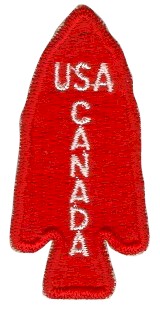
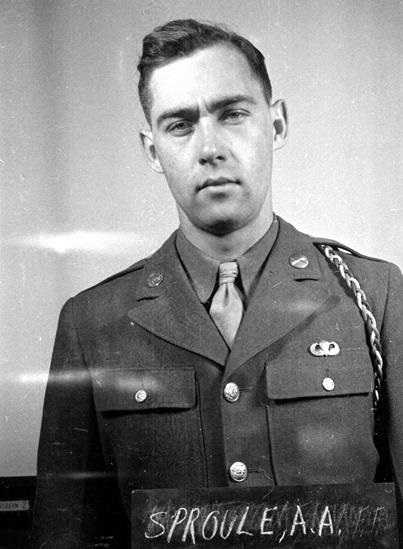
Alvin Armstrong Sproule joined the Toronto Police Department in 1939 as an 18-year old Police Cadet. Once reaching the minimum age requirement of 21 years, Sproule was sworn in as Police Constable #333, but in May 1942 he took leave to enlist in the Canadian Army, joining The Royal Canadian Army Service Corps. Sproule went on to pass selection into the First Special Service Force, an elite joint American-Canadian commando unit with specialist training in hand-to-hand fighting, parachuting and mountain warfare.
(Photo Credit: Bill Ellis and canadiansoldiers.com)
Sproule served in the 5th Company, 2nd Regiment of the FSSF. While exact details of Sproule’s service are still classified, one could look at the unit’s history to know what kind of finding he was involved in.
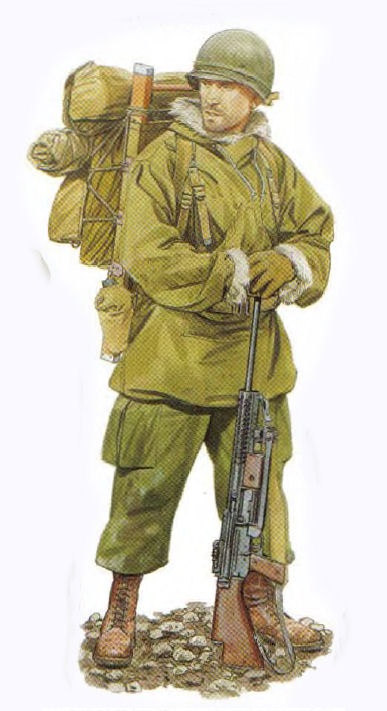
(Photo Credit: Osprey Publishing)
The FSSF first saw action during Aleutian Campaign of 1943 in the Pacific theatre, and were then used extensively in the Mediterranean Theatre, fighting throughout Italy and Southern France. Their assault on the German-held Monte La Difesa was made into a Hollywood film The Devil’s Brigade (1968). During the infamous Anzio campaign, where they were in combat for 99 continuous days, the enemy nicknamed them “The Black Devils” due to the commandos’ tenacity and use of boot polish as face paint. After the fierce fighting in Italy, they would make a combat jump into Southern France, during a lesser-known seaborne invasion dubbed “Operation Dragoon”. They fought on in the south of France towards the Axis-held Alps, and after suffering an irreplaceable attrition rate of over 600%, were eventually disbanded. Sproule was wounded in action, but it is unclear when. The remaining Canadians were mostly dispersed to the 1st Canadian Parachute Battalion as replacements.
The First Special Service Force is perpetuated today by the Canadian Special Operations Regiment and the United States Army’s 1st Special Forces Command (Airborne).
(Photo Credit: First Special Service Force Association)
Sproule would end the war as a Staff Sergeant.
After the war, Sproule returned to the Toronto Police Department, and would soon be “wounded” again, according to The Globe and Mail newspaper. “Annoyed at having his premises searched,” they wrote, a 43 year-old John D’Angelo “became enraged and bit the constable’s right hand”. Assaulting a former commando in such a way could not have ended well for the man.
In 1949, Sproule earned his first Good Conduct badge, earlier than the usual 7 years of good police conduct, due to merit. It carried with it an extra 10 cents pay a day. Sproule soon moved to plainclothes investigations, and in 1952, was made an Acting Detective. In 1954 he received another Good Conduct Badge.
Fellow plainclothesman Jack Webster, who would later author a memoir and establish the Toronto Police Museum, described Sproule as a “fearless police officer with a reputation for bravery.” Webster also shared an anecdote demonstrating Sproule’s fearlessness and proficiency at arms.
On the evening of October 26th, 1955 the pair were partnered together when each other’s regular partners were on leave. As they were making their way back to headquarters at the end of their shift, the police dispatcher broadcast that an armed man was firing shots through his hotel door near Bay and Dundas streets. Webster and Sproule were first on scene at the Ford Hotel (demolished in 1974). Terrified staff reported that the man was still barricaded inside Room 411 after shooting at an employee. Sproule called for reinforcements while Webster made unsuccessful negotiations with the male over the room phone. The gunman continued to fire his shotgun sporadically through his door.
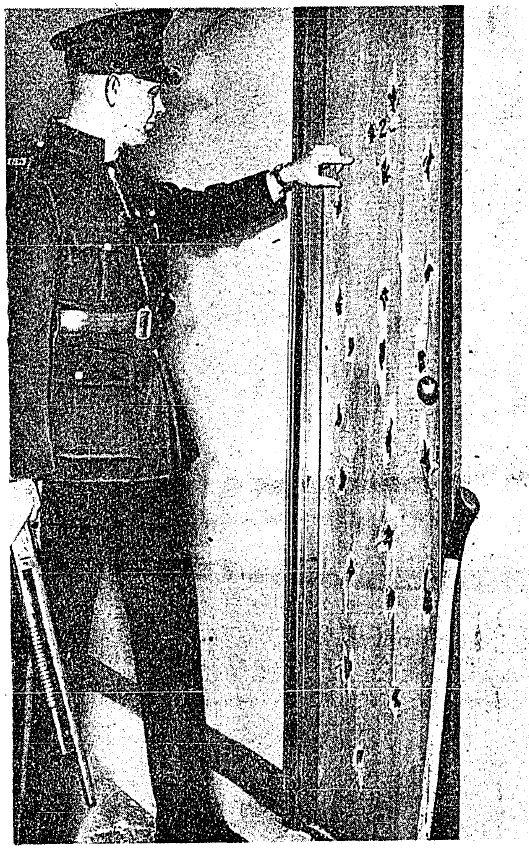
After uniformed officers arrived, “Detective Sproule volunteered to go along the hallway armed with a machine gun that had been brought to the scene, and kick the door in, while spraying the room with gunfire.” Sproule, however, was overruled by Detective Inspector William Matthews, who had arrived and taken charge of the scene. Matthews was concerned that their could be hostages hidden inside.
While waiting for further direction, Sproule and Webster periodically exchanged gun fire with the man while they contained the hallway. “After one of these gunfire exchanges, the man screamed and re-entered his room. We were sure that one of us had wounded him…” The gunman, however, continued to fire through the door – “all the time shouting unintelligible words”.
Suddenly a lone shot rang out, followed by complete silence.
Suspicious of a trap, the officer-in-charge called for tear gas (new at the time at the police department) be brought to the scene. When the “large, artillery-shell-like gas canisters […] designed to be fired from a short stubby-barreled rifle” arrived, there was no one there with the experience to use them. Alvin Sproule volunteered, and re-positioned himself in the courtyard of the hotel, with a clear view to the shooter’s window. This also left him exposed.
While covering the window, contemporary newspapers reported that Inspector Matthews threw a gas grenade from an adjoining room’s window into the gunman’s. Webster however, in his eye-witness account remembers it this way: “This detective [Sproule], who was an experienced infantry soldier from the war, took careful aim and fired the canister. It was an accurate shot and went directly through the window into the room.” In any event, smoke poured out of the room within seconds.
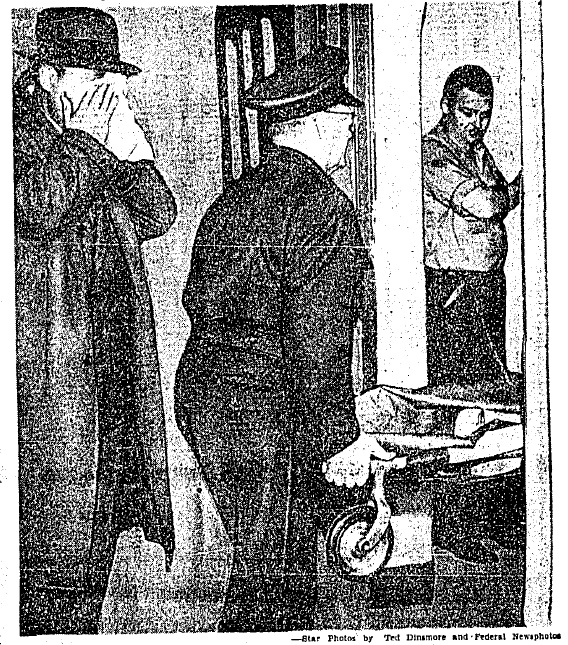
A breaching team of Sproule, Webster and two other detectives “wearing Second World War gas masks” entered the gassed out room only to find the shooter dead from a self-inflicted gunshot wound to the stomach.
“Experienced tear gas handlers later explained to [us] that a single tear gas bullet, about the size of a .38 calibre shell, would have been sufficient to accomplish our task, and that the canister used was large enough to clear that famous ice hockey arena, Maple Leaf Gardens,” said Webster.
The gunman was identified as Zorano Borg of Malta. He had been described as a “usually quiet, friendly twenty-two-year-old European immigrant, who had become despondent with his new life in Canada.” Thanks to Sproule and his colleagues’ swift action, no one else was hurt, though the hotel was a little worse for wear.
Sproule excelled in the Detective branch, and eventually rose to the rank of Sergeant of Detectives, a bygone rank forgotten by most officers today. “The Sergeant [of Detectives] was a rank between Detective Sergeant and Inspector. Like an Army Sergeant-Major his job was never really spelled out in hard and fast terms, but he was the senior Detective, the guy who knew and had done it all and got extra pay for it.” explains retired member Mike Holland.
In 1966, Sproule had the distinction as serving as the liaison to the RCMP during the 1966 House of Commons bombing attempt by Toronto resident Paul Joseph Chartier. Sergeant of Detectives Sproule would last serve at the old 21 Division in the Keele St & Eglinton Ave W area.
The following year, on the 13th of January, 1967, Sproule collapsed and died suddenly at his home on Balaclava Avenue in Scarborough. Just 45 years old, Alvin Sproule left a wife and six children.
Sources and further reading:
- D. Draper. Annual Report of the Chief Constable of the City of Toronto for the Year 1944, Toronto: The Carswell Co Ltd City Printers, 1945.
- J. Webster. Copper Jack: My Life on the Force. Pages 103-105. Toronto: Dundurn Press, 1991.
- R. Chartrand and R. Volstad. Canadian Forces in World War II. Oxford: Osprey Publishing, 2001.
- RD Burhans. The First Special Service Force. A Canadian-American Wartime Alliance: The Devil’s Brigade. Ed Conroy Books Ltd, 1948.
- First Special Service Force Association website. History. http://www.firstspecialserviceforce.net/history.html 2022.
- Canadiansoldiers.com. First Special Service Force. http://canadiansoldiers.com/organization/specialforces/1ssf.htm 2022.
- Toronto Public Library – Historical Newspapers Database. The Globe and Mail 1946-08-12, p.5 “Toronto Public Library – Historical Newspapers Database. The Globe and Mail 1946-08-12, p.5 “Man Bites Police, Police Arrest Man“; The Globe and Mail 1952-12-19, p.1 “Worked on Boyd Case Two Toronto Detectives Get Higher Positions”; The Globe and Mail 1955-10-27 p.1“Hotel Shooting Battle Ends With Crazed Gunner’s Suicide” p.3 “Tense Fearful Crowd Gathered Near Scene”; Toronto Daily Star 1955-10-27 p.1 “Buckshot Barrage Keeps Tear-Gas Police at Bay Man Kills Self in Hotel,” p.3 “Defies Tear Gas, Riot Guns, Dies in Shot-riddled Room”; The Globe and Mail 1962-02-24, p. 1 “Slapped Rabbi to Stop Hysterics Sergeant Declares at Inquiry“; The Globe and Mail 1967-01-14, p. 2 “Alvin Sproule: Sergeant, 45, Joined Police as Cadet in 1939″.
 The Khaki and Blue Project