The following is a speech delivered by Matthew Scarlino at the Toronto Police Mounted Unit 140th Anniversary Banquet held in February 2026. The banquet celebrated 140 years of the unit’s service to nation and community. Matthew is the Historian of the Toronto Police Military Veterans Association and served six years with the Toronto Police Mounted Unit.
In the opening days of August 1914, the Imperial German Army invaded Belgium, and was headed for France. It was the beginning of the First World War. The British Army rushed to the defence of these free countries of Europe, and in the weeks that followed, they fought the massive German Army in losing defensive battles, beginning a major withdrawal now known as the “Great Retreat”.
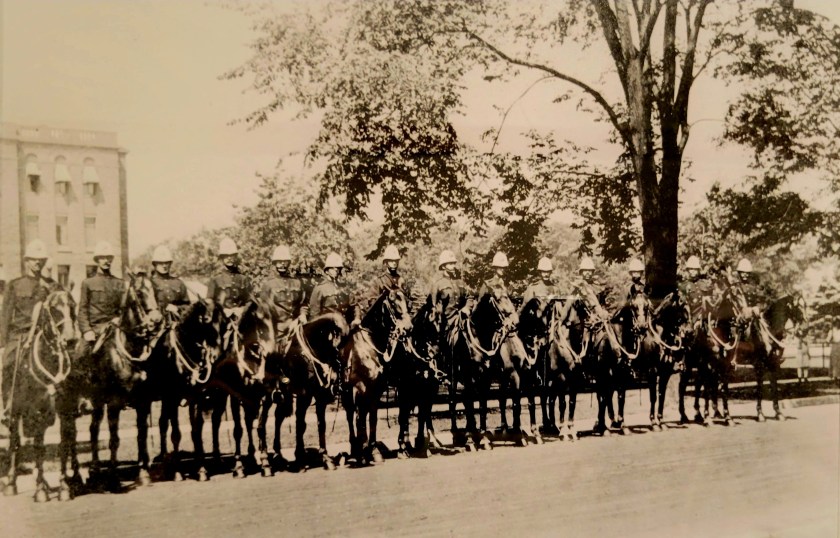
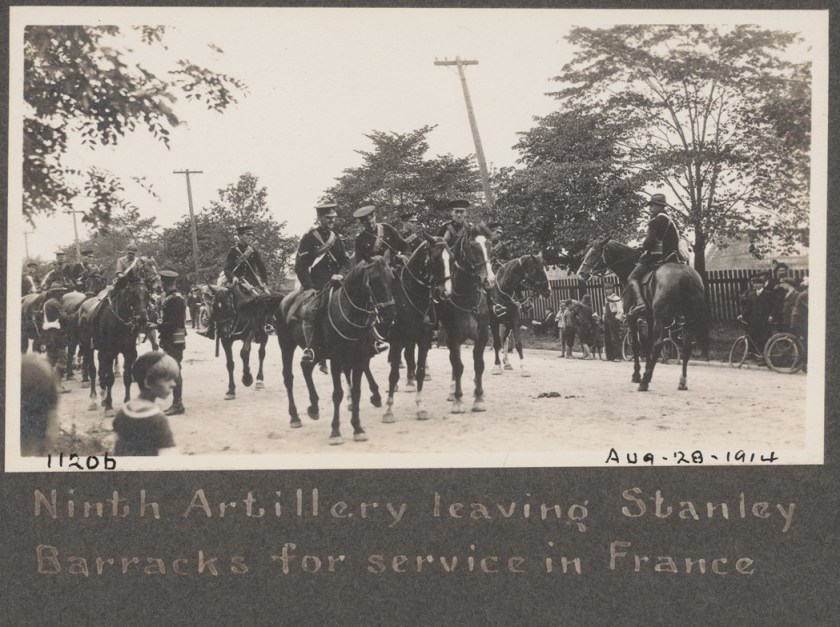
The situation was dire, and Canada was rushing to the defence of the Mother Country. Toronto Police Chief Henry Grassett allowed dozens of Toronto Police officers to enlist in the armed forces. The Chief also granted a donation of 18 police horses to serve in the Canadian Field Artillery. Artillery was shaping up to be a decisive factor in this war, and in the short term, could help halt the German advance.
But what would our police horses actually do?
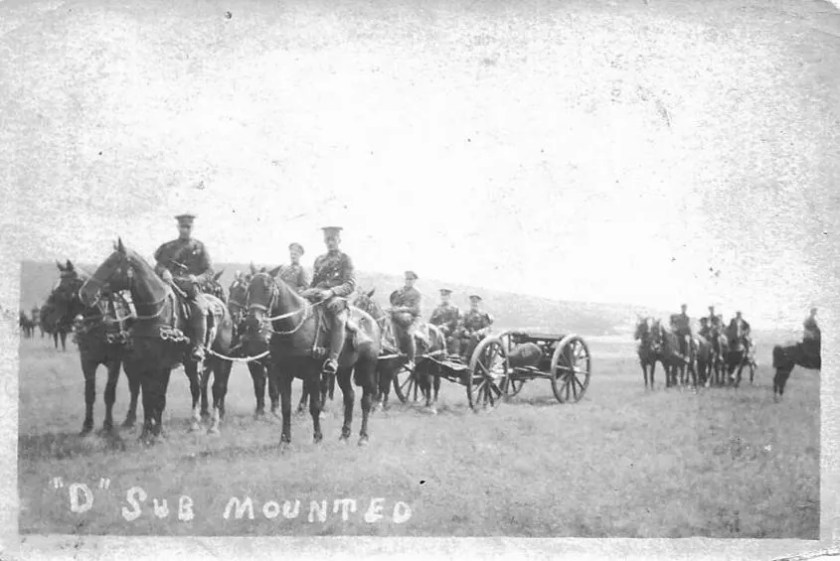
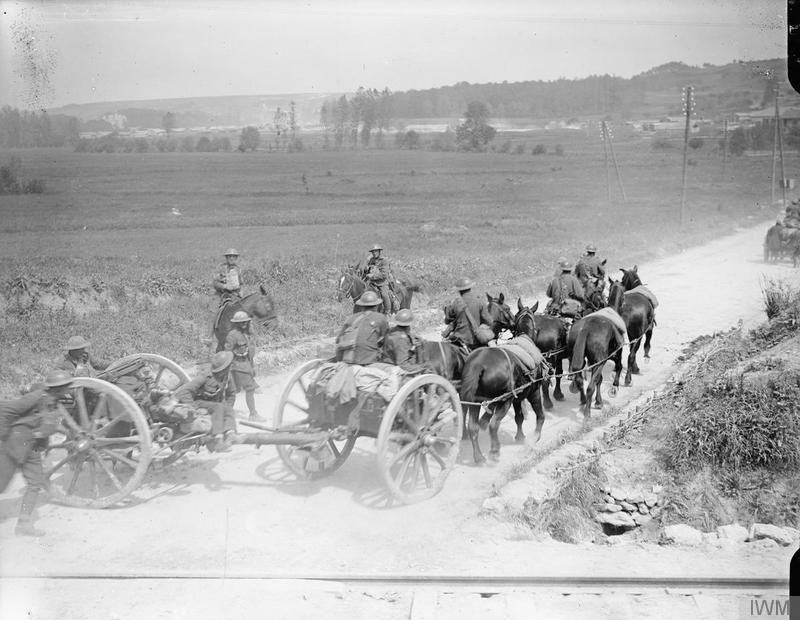
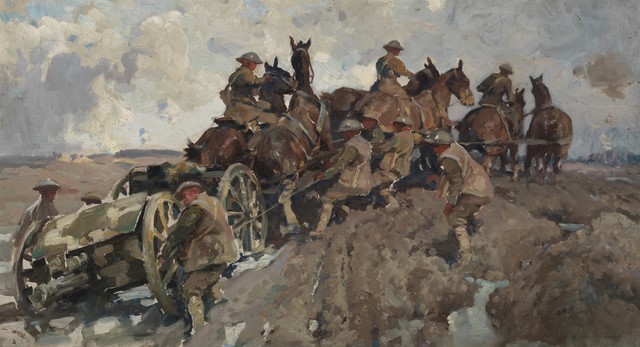
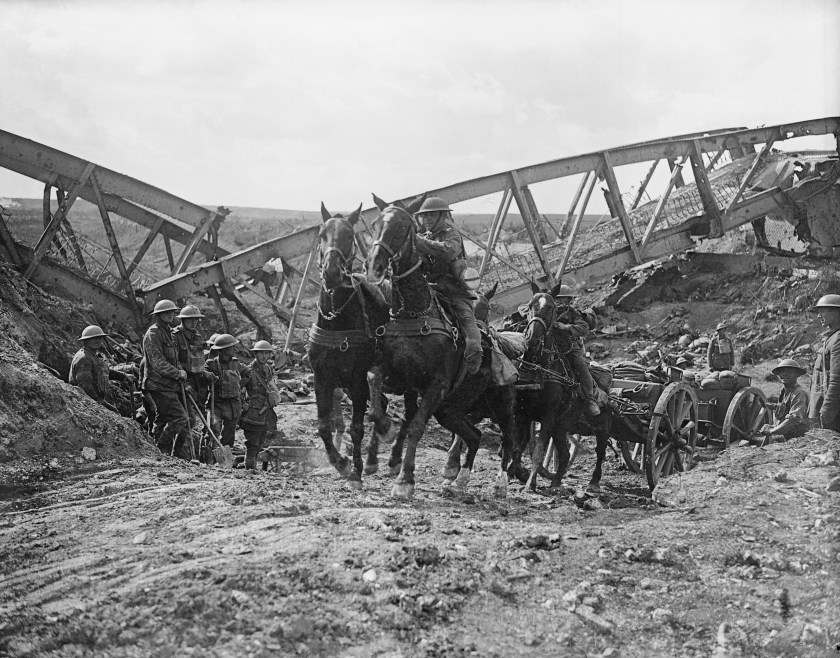
Motor transport was still new, it was cumbersome and prone to failure, especially over the broken ground of the Western Front. Horses were still the most maneuverable and mobile asset on the battlefield. A Canadian 18-pounder field gun, the standard artillery piece in use at the time, was pulled by a team of six horses. The horses were driven in pairs by soldiers known as a Drivers riding on the right-hand horse of each pair. Behind in tow, was an ammunition cart known as a limber, with more soldiers riding on top (known as gunners), and the field gun itself, which all the men were responsible for. This team of men, horses, and guns was known as a Subsection or a “sub gun team”.
Similar teams pulled ammunition wagons.
And finally, Soldiers in leadership positions rode horses independent of these teams while directing operations. These groups of horses and men were able to quickly move firepower around the battlefield and deploy these field guns where and when they were needed most.
In late August, our 18 horses marked for donation were given to the 9th Battery, Canadian Field Artillery, known as Toronto’s Battery. Four Toronto Police Mounted officers joined with them – Constables Charles Chalkin, Ernest Masters, Thomas Dundas, and William Connor. Connor, sadly, would not survive the war.
Our horses were transported by freight train to Quebec, where they began training, and went from “Police Horse” to “Battery Horse”. While some of our Toronto Police horses surely served on the gun teams, their exceptional training and police experience no doubt had them serving as the personal mounts of leaders within the Battery.
After an arduous transatlantic voyage and hard training in England, our horses set foot in France in February 1915 and then moved up to the line.
Our horses first real baptism of fire came at Ypres. The medieval Belgian town was at a strategic crossroads and was surrounded on three sides by enemy. On the morning of the 22nd of April 1915, a surprise poison gas attack launched Canada’s largest battle in its history up to that point. The guns of the 9th Battery were quick to respond. The 9th Battery provided fire support to the 3rd Canadian Infantry Brigade, in which many Toronto soldiers, including former Toronto police officers serving among them, were experiencing the brunt of attacks. As the day dragged on and into the night our horses charged back and forth moving the guns among the shifting battle lines.
Police Horse St. Patrick, affectionately known as “Paddy”, is known to have been killed here while delivering much-needed ammunition under fire. It is believed a number of our horses died at Ypres.
Ultimately, our mounts’ bravery under fire helped save the day, the German attack was repulsed, and the Canadians were victorious.
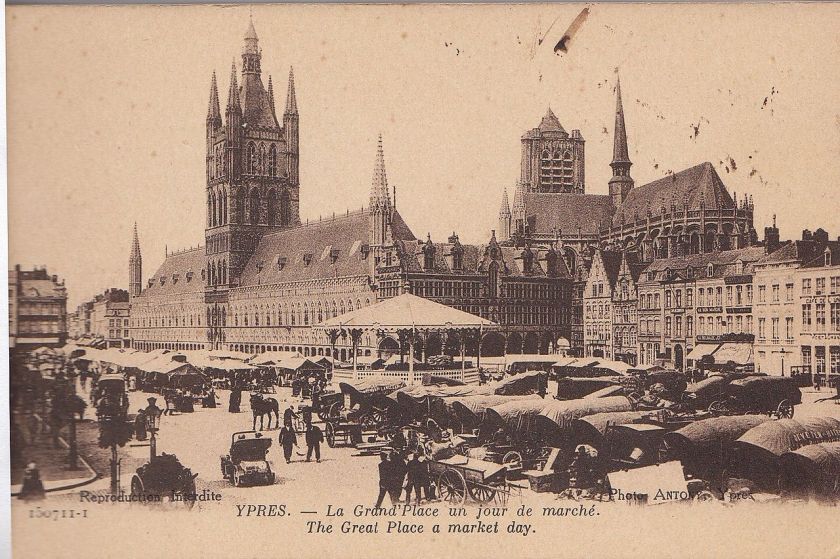
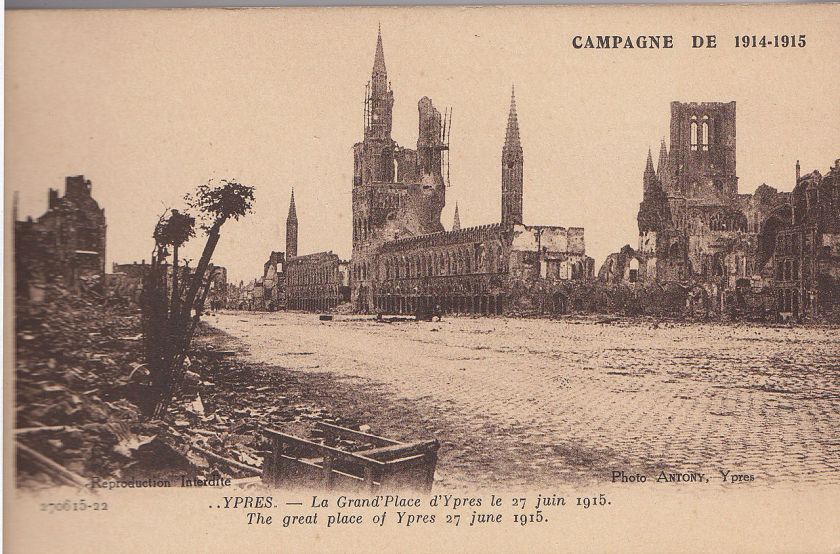
For four more years of war our horses served at infamous places like the Somme, Vimy Ridge, Hill 70, Passchendaele, Amiens, the Pursuit to Mons.
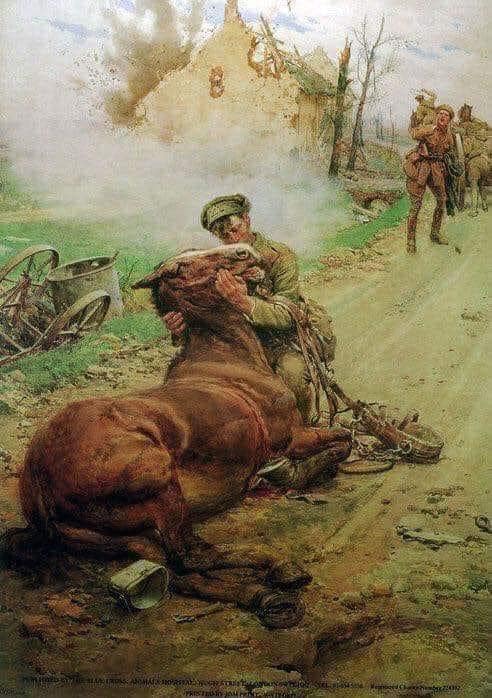
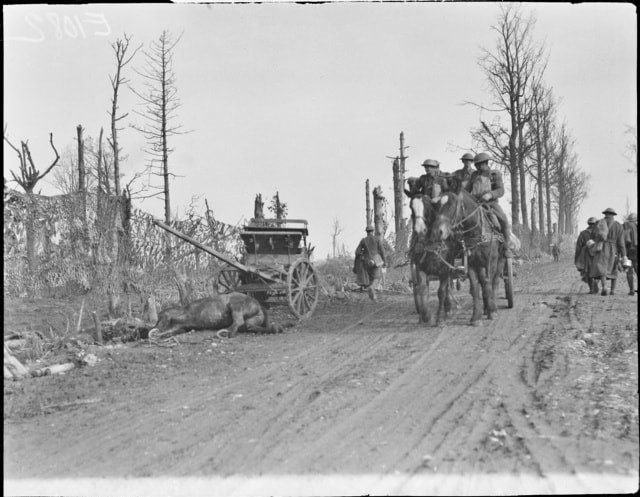
One by one our horses fell victim to shrapnel and gunfire, gas and barbed wire. Exhaustion. Even deep mud claimed horses. Disease claimed others. Gravely injured horses would be mercifully shot by officers, who spared their own riders the tragic duty of doing so.
But their sacrifice of our horses was not in vain.
The artillery our horses pulled provided firepower and cover when our troops advanced, and their fire would stem the flow of the enemy when they attacked. Their service saved countless Canadian lives.
Towards the end of the war, our horses proved invaluable in the huge breakout offensives where mobility and speed were key. It was an astonishing series of Canadian victories dubbed “Canada’s 100 Days” offensive.
It should never be forgotten that our horses were absolutely essential to our victory.
And now, the Honour Roll of Toronto Police Mounts who perished during the Great War.
Dover
Sherbrooke
Mischief
St. Paul
Brampton
Anchor
Juryman
Mistake
St. David
Barrie
Vanguard
Vanity
Crusader
St. Patrick
Matthew
Coroner
Postmaster
Canada
When the First World War finally ended, on November 11th, 1918, all but one of our war horses were dead. A horse named Bunny defied all odds. Bunny was Strawberry Roan in colour, with white socks on his hind legs, and long ears. In four years of war Bunny stoically carried his riders through hell. One of his riders was killed. Another One of his riders, former Toronto Police Mounted Unit Constable Thomas Dundas, was wounded three times. Dundas was also most decorated Toronto Police officer to serve in the war – for his bravery he was awarded the Military Medal, the Meritorious Service Medal, and was Mentioned in Despatches. There is no doubt that Bunny helped him perform these deeds, and his bravery should also be remembered.
Sadly, as part of a government program to rebuild war-torn Belgium, the horses of the 9th Battery were to be auctioned off to Belgian farmers. The army no longer needed them and only Officers’ Mounts were allowed to be brought home.
But Bunny’s case was raised as a special one, and Toronto newspapers publicized attempts to bring him home. Despite the efforts of Toronto Mayor Tommy Church, Toronto Police Chief Grassett, and Major George Cook of the 9th Battery, Bunny was sold before an exception could be made.
One soldier of the 9th Battery expressed his dismay in the Toronto Daily Star:
“Yes! Our horses should be sold, but there is something pathetic that stirs even the coarsest soul, when a driver gives the old team that have been his companions in war, his bugbears in peace – a parting groom, a good-bye pat and sends them off to the dull obscurity of Belgium farm life.
A week later a queer but pathetic sight meets the eye; a great lumbering Belgian wagon thunders over the cobbles, drawn by a dull-eyed cow, side by side the gallant leader of a sub.-gun team.
That noble beast who used to gallop into battle, breathing the powder fumes and trampling under his thundering hoofs the most famous battlefields the world has ever known, now drags along, a team mate to a cow, with an old Belgian farmer jerking the single rein and crying the monotonous “vite, vite, law”; all the fire of battle has died out of his eyes, gone the gallant bearing, and now his head droops, his eyes are dull and all that remains to testify to his service is the army arrow on the quarter side by side with the huge “Z” that testifies to his release, his demobilization, his ignominy.”
For the Toronto Police War Horses, there was no happy ending. We are forever in their debt, and we owe them our gratitude.
Sources Consulted
Archival Records and Government Documents
- Library and Archives Canada. Guide to Sources Relating to Units of the Canadian Expeditionary Force: 9th Battery, Canadian Field Artillery.
- Library and Archives Canada. Service File of Lovelace.
- Library and Archives Canada. Horse Lines, Salisbury Plain, 1914.
- Library and Archives Canada. A Horse Killed by a Direct Hit, September 1916.
- Library and Archives Canada. Officers of the 9th Battery, Canadian Field Artillery, January 1919.
- City of Toronto Archives. Series 1418, File 1, Page 5.
- Veterans Affairs Canada. Bunny Goes to Battle.
- Canadian War Museum. A Rough Diary of the Trip from Valcartier to Salisbury Plain.
- Canadian War Museum. Artillery Horse Killed.
Military Records and Unit Histories
- 3rd Canadian Field Artillery Nominal Roll.
- Nominal Roll of 3rd Battery, Canadian Field Artillery.
- Part 4-1: Artillery Batteries.
- First World War Information Package.
- List of 9th Battery Casualties to February 1916.
- List of Horses Killed, February 1916.
- Brigade Memorandum: Clipping of Horses (3rd Brigade, CFA), 12 June 1916.
- Brigade Memorandum: Sick Horses (3rd Brigade, CFA), 14 June 1916.
Newspapers and Periodicals
- The Globe. “Efficiency Marked Artillery’s Departure,” 29 August 1914.
- Toronto Telegram. “Famous Police Horse (Bunny),” 20 February 1919.
- Toronto Star. “Untold Story of Toronto’s Real Canadian War Horse,” 10 February 2012.
- The Toronto Daily Star, 19 April 1919.
- The Toronto Daily Star, 21 May 1919.
- The Birmingham News, 16 February 1919.
- The Kingston Whig-Standard. “War Horses Went Where Vehicles Feared to Tread.”
- CBC News. Morning Glory: Canada’s Own First World War Horse.
Literary and Interpretive Sources
- Henry, E.R. The Battery Horse.
- Society of Classical Poets. The Battery Horse.
Photographic Sources
- Chief Constable’s Annual Report photographs, 1914 and 1918.
- Library and Archives Canada wartime horse photographs, 1914-1919.
- City of Toronto Archives photographic records.
- Contemporary and historical photographs from The Khaki and Blue Project Digital Archive.

